
Common pain point: firms hire day-to-day IT support when they actually need strategic advisory, or bring in a strategist when what they really need is hands-on execution. Either mismatch wastes budget and stalls the initiatives that matter most.
This guide breaks down what IT management consulting actually is, what consultants do day to day, how a typical engagement unfolds, what it costs, and how to pick the right partner for a specialized industry like investment management.
Key Takeaways
- IT management consulting aligns tech strategy with business goals; it advises, it does not run daily ops
- Core services cover strategy, projects, cybersecurity, infrastructure, compliance, and data governance
- Pricing uses hourly, fixed-project, or retainer models based on scope and seniority
- Choose partners for track record, vendor independence, and a plan your team can execute
What Is IT Management Consulting?
IT management consulting is the practice of assessing an organization's technology capabilities and providing strategic guidance to align IT investment, governance, and operations with business goals. The work centers on deciding what to build, why, and in what order — not on fixing servers or writing code.
It sits at the intersection of two disciplines:
- IT consulting — technical, systems-specific advice (a cloud migration, a platform selection)
- Management consulting — business performance, operations, and organizational advice
IT management consulting sits at the overlap. Engagements are typically project-based and advisory, producing roadmaps, assessments, and recommendations rather than hands-on daily system operation. A consultant defines where to go and how to get there; internal teams or service partners typically execute.
IT Management Consulting vs. Managed IT Services
These get mixed up constantly, and the distinction matters for budgeting:
- Managed IT services — ongoing, hands-on operation, monitoring, and support of existing systems for a recurring fee
- IT management consulting — advisory, time-bound, focused on strategy and direction
Most mature organizations use both. A consultant sets the strategy and roadmap; an internal team or managed provider handles day-to-day system operations.
IT Management Consulting vs. General IT Consulting and Management Consulting
General IT consulting solves one narrow technical problem — a cloud migration, a system selection, a network upgrade. Management consulting addresses broader business strategy without necessarily touching technology architecture at all.
IT management consulting ties both together. It connects technology decisions and governance directly to measurable business outcomes, rather than treating tech as a standalone project or business strategy as an abstract exercise.

Core Services and Functions of IT Management Consulting
Most IT management consulting work clusters into a few recurring service areas—especially inside investment management:
- IT strategy and technology roadmaps — Multi-year plans that sequence the capabilities a firm needs so technology spend tracks business priorities.
- Project and program management — Oversight of system rollouts, platform upgrades, and migrations so delivery stays on time and on budget. Adeptyx teams, for example, have led implementations of Charles River Development, IHS Markit, and Vestmark for asset and wealth managers.
- Compliance and risk management — Frameworks for shifting rules such as the SEC's 2024 Regulation S-P amendments, which require covered broker-dealers, advisers, and transfer agents to maintain written incident-response policies and notify affected individuals within 30 days of a qualifying breach.
- Platform modernization and data architecture — Modernizing legacy trading, portfolio, and data platforms—and weighing hosting patterns—without disrupting live operations.
- Cybersecurity advisory — Vulnerability assessments and layered controls. IBM's 2024 Cost of a Data Breach report puts the average financial-industry breach at $6.08 million, 22% above the global average of $4.88 million.
- Data governance and vendor/spend review — Contract audits plus data-quality and architecture improvements, critical where bad data distorts decisions, regulatory reporting, and client outcomes.
The IT Management Consulting Process
Engagements generally move through four stages, though the labels vary by firm.
- Assessment. Consultants review current systems, workflows, spend, and pain points through interviews, workflow reviews, and data analysis. The goal: a clear picture of what's working, what isn't, and where the risk sits.
- Strategy and planning. Findings become a prioritized roadmap tied to business goals and budget — a sequenced plan with realistic timeframes, not a generic wish list.
- Implementation support. Consultants guide execution—system rollouts, vendor selection, or process redesign—keeping delivery on schedule and flagging risks early.
- Monitoring and review. Post-implementation check-ins measure results against original goals and surface further optimization opportunities.
Some firms formalize this into a named framework to keep engagements consistent across clients. Adeptyx applies a structured Assess, Advise, Design, Deliver methodology with its asset and wealth management clients:
- Assess — map current systems, data flows, and pain points against industry benchmarks
- Advise — build the roadmap, business case, and cost/benefit analysis
- Design — translate requirements into architecture, workflows, and testing plans
- Deliver — manage execution through go-live, including training and post-launch stabilization

This structure matters because vague engagements produce vague results. A named framework forces both sides to agree on what "done" looks like at each stage.
Benefits and Signs It's Time to Bring In an IT Management Consultant
Core benefits include specialized expertise, lower operational risk, better efficiency, and clearer strategic direction, without the cost of a full-time executive hire:
- Access to specialized expertise on demand
- Reduced operational and delivery risk
- Improved efficiency across IT operations
- Clearer strategic direction for major initiatives
But when should a business actually engage one? Watch for these signals:
- A major change is coming: a system replacement, an M&A integration, or a looming compliance deadline
- Projects keep slipping past their timelines, over and over
- IT spend keeps climbing without any clear return on investment
- Internal teams are stretched too thin to plan strategically while also keeping systems running
Timing matters more than most people realize. McKinsey and Oxford's research on large IT projects found they run 45% over budget and 7% over schedule on average, delivering 56% less value than predicted. Engaging a consultant before a major initiative kicks off, rather than after it starts wobbling, consistently produces better outcomes than reactive intervention.
Cost of IT Management Consulting and How to Choose the Right Partner
Pricing generally follows three models:
| Model | Best For | Notes |
|---|---|---|
| Hourly/daily rate | Short-term advice, quick assessments | Flexible, but costs can add up on longer projects |
| Fixed project fee | Defined-scope engagements | Predictable budgeting, requires clear scoping upfront |
| Monthly retainer | Ongoing strategic guidance | Good for firms needing continuous advisory access |
Rates vary widely by seniority and specialization. General surveys of US technical consultants put median hourly rates around $180, climbing toward $200 for consultants with advanced credentials or deep specialization.
Senior, highly specialized consultants cost more per hour, but they often finish faster and avoid costly missteps. That usually offsets the higher rate.
Frame cost against risk avoided. A consultant who prevents a failed implementation or closes a compliance gap can deliver value far beyond the fee, particularly given how often large IT projects blow past budget.
What to Look for in a Partner
- Track record with organizations of similar size and industry
- Independence from vendor commissions or reseller arrangements
- Transparent scope and pricing with no vague deliverables
- A plan your internal team can actually execute, not just a slide deck
Firms in specialized, regulated industries benefit most from consultants who understand full front-to-back operations, not generic IT alone. A consultant who only knows networks and servers can't meaningfully advise on OMS modernization or portfolio-construction data flows.
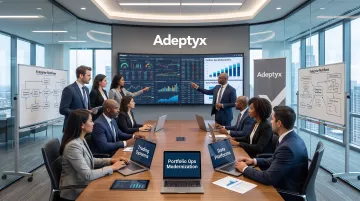
Adeptyx is built for this gap. Rather than generic IT advisory, it acts as an embedded consulting partner for asset and wealth management organizations. The firm pairs investment management expertise across trading, portfolio construction, compliance, and data with the four-phase Assess, Advise, Design, Deliver methodology described above.
It has worked with more than 45 asset managers, from boutique shops to firms overseeing over $10 trillion in AUM. Engagements with organizations such as Vanguard, Fisher Investments, and Manulife have modernized data platforms, OMS environments, and portfolio operations without disrupting day-to-day business.
Frequently Asked Questions
How much should an IT consultant charge?
Rates depend on the model: hourly or daily for short-term work, fixed fees for defined projects, or monthly retainers for ongoing guidance. US technical consultant medians run about $180–$200 per hour, with senior specialists at the higher end.
What is the difference between IT management and IT consulting?
IT management refers to the day-to-day operation of technology systems and teams. IT management consulting is strategic advisory work — assessing capabilities and building roadmaps rather than running systems directly.
What does an IT management consultant do?
A consultant assesses current technology and operations, then delivers strategy, project oversight, risk and compliance guidance, and data governance recommendations tied to business goals.
How is IT management consulting different from managed IT services?
Consulting sets strategic direction; managed services execute daily operations and support. Many businesses use both together — one for planning, one for running the systems.
When should a business hire an IT management consultant?
Engage one when a major change is approaching (system replacement, M&A, compliance deadline), when projects repeatedly slip schedule, or when IT spend keeps rising without clear ROI.
What industries benefit most from IT management consulting?
Regulated, data-intensive industries — financial services and investment management in particular — benefit most because compliance requirements and data-quality demands directly affect business outcomes.